

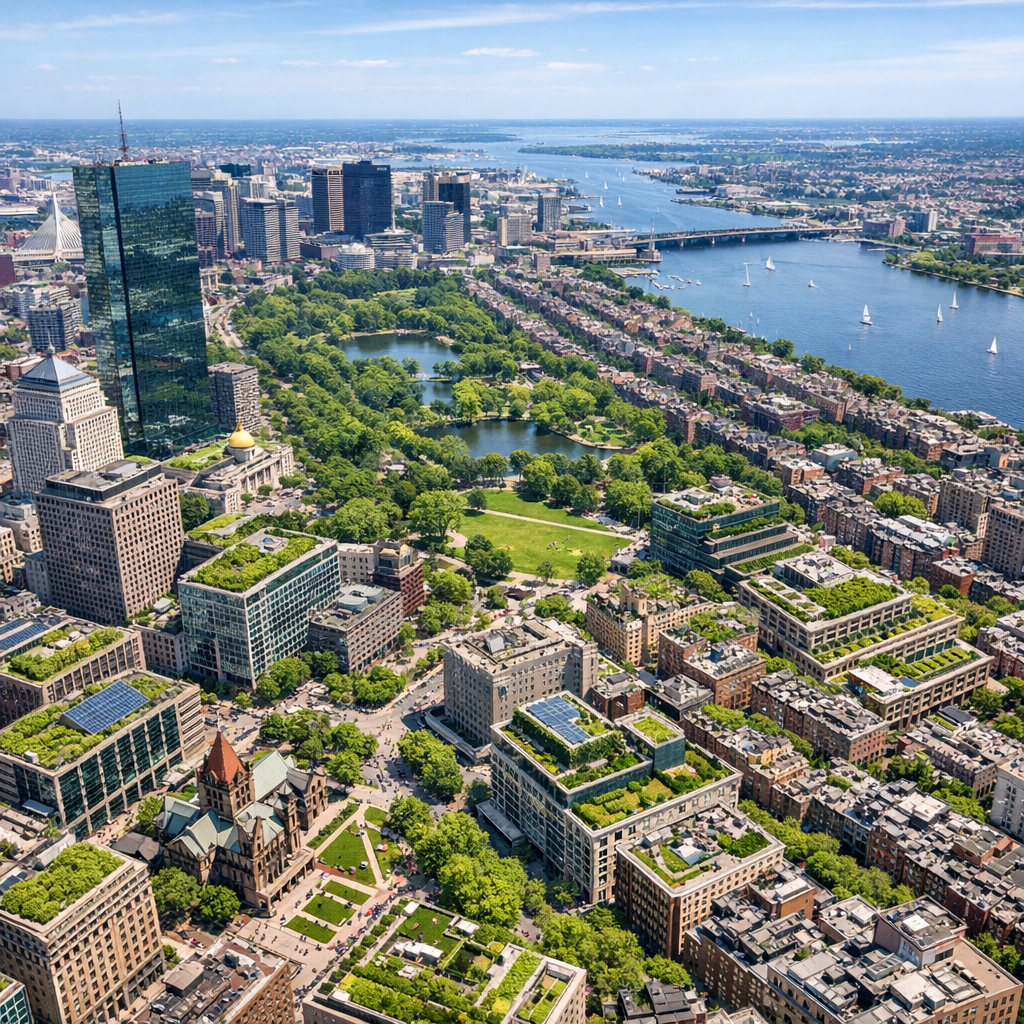
Boston is proactively addressing climate change through comprehensive planning and community engagement. The city’s 2030 Climate Action Plan outlines strategies to reduce carbon emissions and strengthen resilience against climate impacts.
Key Objectives of the 2030 Climate Action Plan
The plan focuses on achieving net-zero carbon emissions by 2050, with interim goals such as reducing community-wide greenhouse gas emissions by 50% by 2030. This involves:
- Decarbonizing buildings to improve energy efficiency and reduce emissions.
- Promoting sustainable and equitable transportation options.
- Transitioning to clean, renewable energy sources.
- Enhancing resilience to extreme weather events and sea-level rise.
These initiatives aim to provide benefits like energy affordability, job creation, reduced pollution, and improved public health across all neighborhoods. Learn more about the Climate Action Plan.
Community Involvement and Resources
Boston encourages residents to participate in climate action through various programs:
- Boston Community Choice Electricity (BCCE): Offers residents control over their electricity sources, promoting renewable energy adoption. Explore BCCE.
- Community Clean Air Grant Program: Provides funding for local organizations to implement air quality improvement projects. Applications are due June 30, 2026. Apply here.
These programs empower residents to contribute to the city’s climate goals and enhance community resilience.
Addressing Urban Heat and Flooding
Boston is also tackling urban heat and flooding challenges:
- Urban Heat Island Effect: The city’s extensive coverage of roofs, roads, and parking lots can increase neighborhood temperatures by up to 14 degrees compared to less developed areas. Initiatives like adding green roofs and increasing tree cover aim to mitigate this effect. Read more.
- Flooding and Sewage Overflows: Aging combined sewer systems can lead to sewage overflows during heavy rains, affecting waterways like the Charles River and Alewife Brook. The Massachusetts Water Resources Authority is working on control plans to address this issue. Learn more.
By understanding and participating in these initiatives, residents can play a vital role in Boston’s climate resilience efforts.