

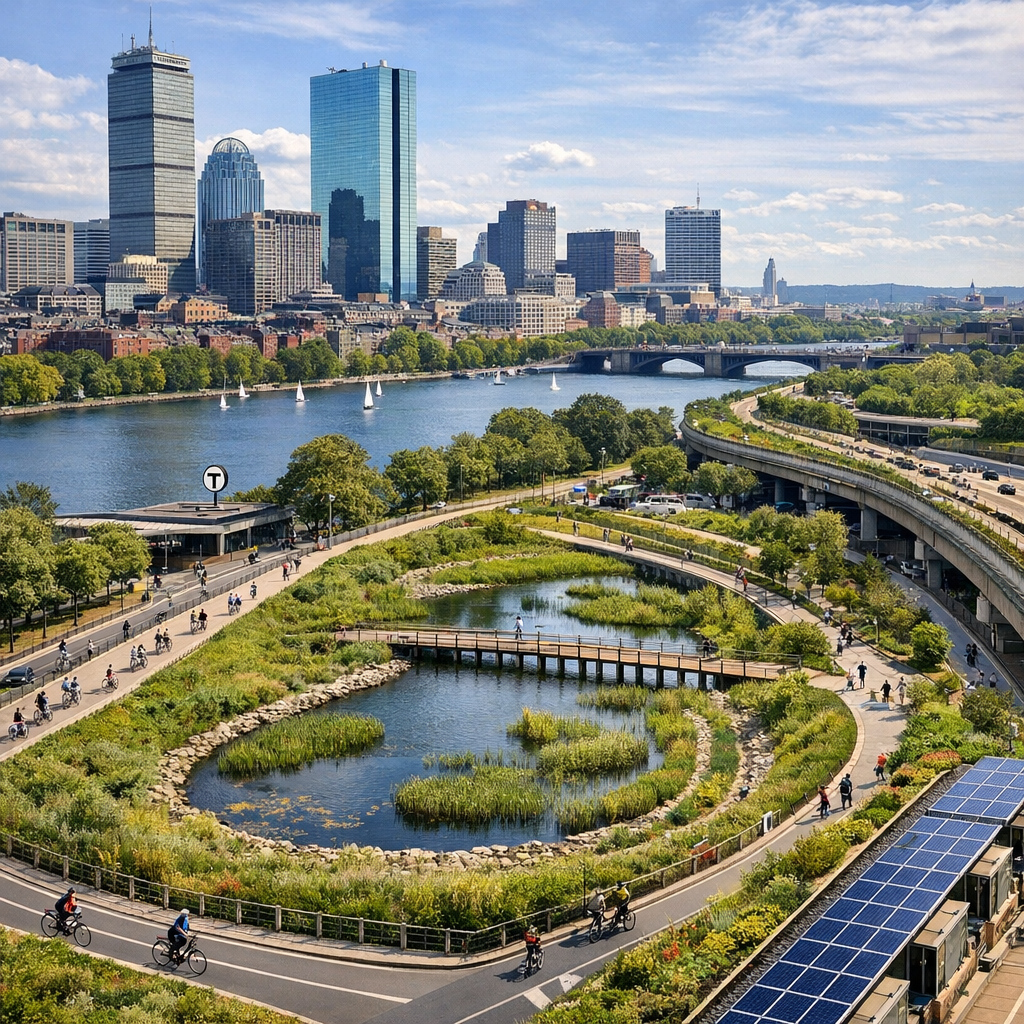
Boston’s climate is undergoing significant changes, with rising temperatures and more frequent extreme weather events. These shifts have profound implications for the city’s infrastructure, public health, and overall quality of life.
Rising Temperatures and Heat Risks
Over the past century, Massachusetts has experienced a temperature increase of approximately 3.5°F. This warming trend has led to more hot days and longer heatwaves. Historically, Boston averaged around 10 days over 90°F each summer. Projections indicate that by the 2070s, the city could face up to 130 days annually with temperatures exceeding 80°F. Such extreme heat poses health risks, particularly for vulnerable populations, including older adults, children, and those with pre-existing health conditions. Learn more about Boston’s heat resilience efforts.
Urban Heat Island Effect
The urban heat island effect exacerbates temperature increases in Boston. Surfaces like roofs, roads, and parking lots absorb and retain heat, raising temperatures in some neighborhoods by up to 14 degrees compared to less-developed areas. This effect intensifies heat emergencies, especially in communities with limited green spaces. Read more about the urban heat island effect in Boston.
Increased Flooding Risks
Climate change is also contributing to more intense and frequent storms, leading to increased flooding risks. Rising sea levels and heavy precipitation events threaten low-lying coastal areas, such as East Boston, South Boston, and Dorchester. Flooding can damage property, disrupt transportation, and pose health risks due to mold growth and waterborne diseases. Explore Boston’s climate resilience initiatives.
Public Health Implications
Extreme temperatures and flooding events have direct and indirect effects on public health. Heatwaves can lead to heat-related illnesses, while flooding can result in injuries and exposure to contaminants. A study by Mass General Brigham highlighted significant racial disparities in temperature-related deaths, emphasizing the need for equitable climate resilience strategies. Learn more about the study on temperature-related deaths.
Community and City Initiatives
In response to these challenges, Boston has developed comprehensive plans to mitigate and adapt to climate change. The city’s Climate Action Plan outlines strategies to reduce greenhouse gas emissions and enhance resilience. Initiatives include increasing green spaces, improving stormwater management, and implementing heat resilience solutions. Community engagement is central to these efforts, ensuring that all residents have a voice in shaping a sustainable future. Read about Boston’s Climate Action Plan.
Understanding and addressing the impacts of climate change is crucial for Boston’s future. Through informed community action and robust city planning, Boston aims to navigate these challenges and build a resilient, equitable, and sustainable city for all.