

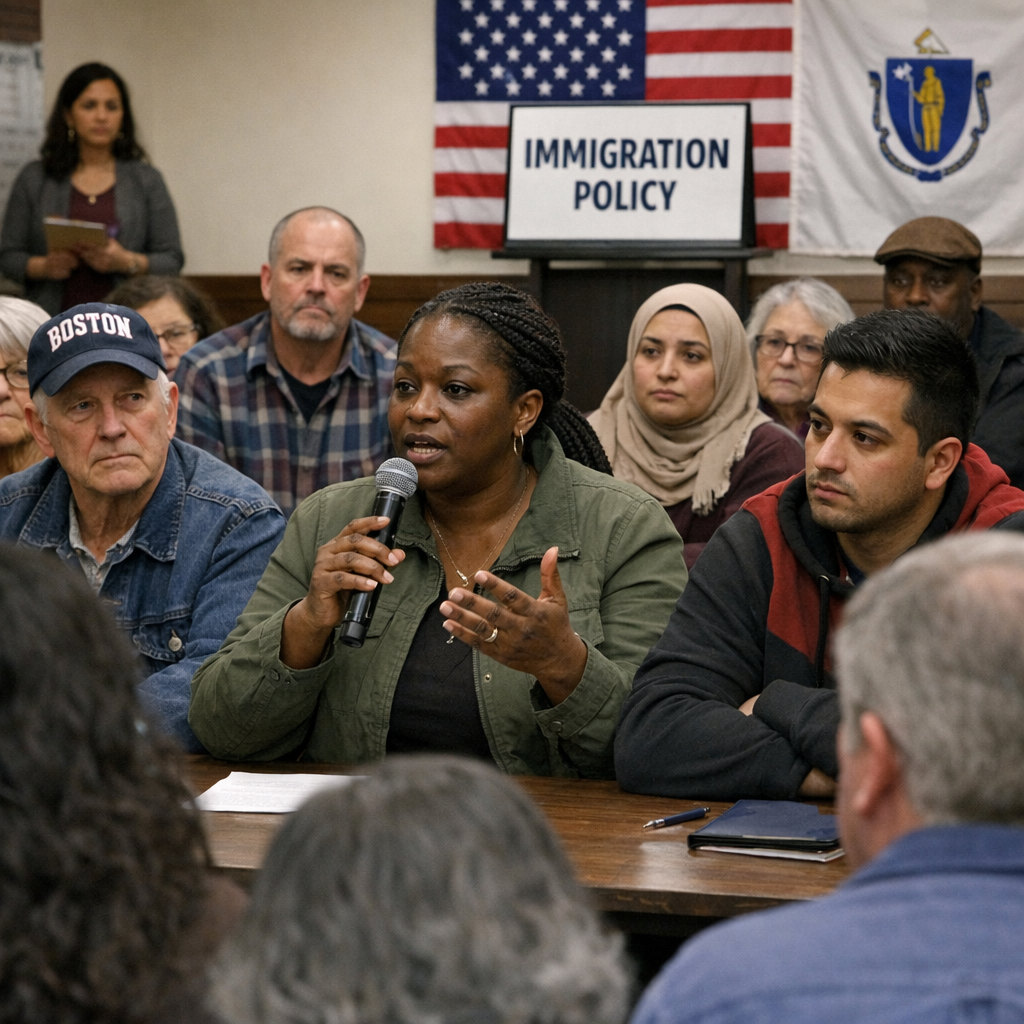
In recent years, Boston has experienced significant federal immigration enforcement activities, leading to profound effects on its communities. The city’s designation as a sanctuary city has placed it at the forefront of national immigration debates, influencing local policies and community dynamics.
Federal Enforcement Actions in Boston
In 2025, the Trump administration initiated ‘Operation Patriot 2.0,’ intensifying Immigration and Customs Enforcement (ICE) operations in sanctuary cities, including Boston. This surge aimed to target individuals deemed threats to public safety. Reports indicated that ICE agents conducted arrests in various public spaces, such as workplaces and courthouses, causing widespread concern among residents. The exact number of detentions during this period remains undisclosed. [Source: NBC Boston]
Community Response and Concerns
The heightened ICE presence led to increased anxiety within immigrant communities. Residents reported sightings of unmarked ICE vehicles in neighborhoods, and some individuals refrained from public activities due to fear of detention. In Everett, Massachusetts, the annual Hispanic Heritage Month festival was canceled, with the mayor citing concerns for community safety amid the enforcement actions. [Source: NBC Boston]
Local Government’s Stance
Boston’s leadership has consistently opposed federal immigration enforcement measures that conflict with the city’s sanctuary policies. Mayor Michelle Wu emphasized Boston’s commitment to being a welcoming city for all residents, stating, ‘Boston follows the law—city, state, and federal. We are the safest major city in the country because all of our community members know that they are part of how we keep the entire community safe.’ [Source: NBC Boston]
Impact on Public Services
The presence of ICE operations has also affected local institutions, including schools. In Waltham, Massachusetts, an ICE arrest near a school prompted concerns about student safety and well-being. Superintendent Marisa Mendonsa noted that students who witnessed the arrest experienced trauma, highlighting the broader implications of federal enforcement actions on community services. [Source: WBUR]
Conclusion
Boston’s experience underscores the complex interplay between national immigration policies and local community dynamics. The city’s response reflects a commitment to protecting its residents while navigating the challenges posed by federal enforcement actions. As immigration policies continue to evolve, Boston remains a focal point in the national conversation, striving to balance legal obligations with the well-being of its diverse population.