

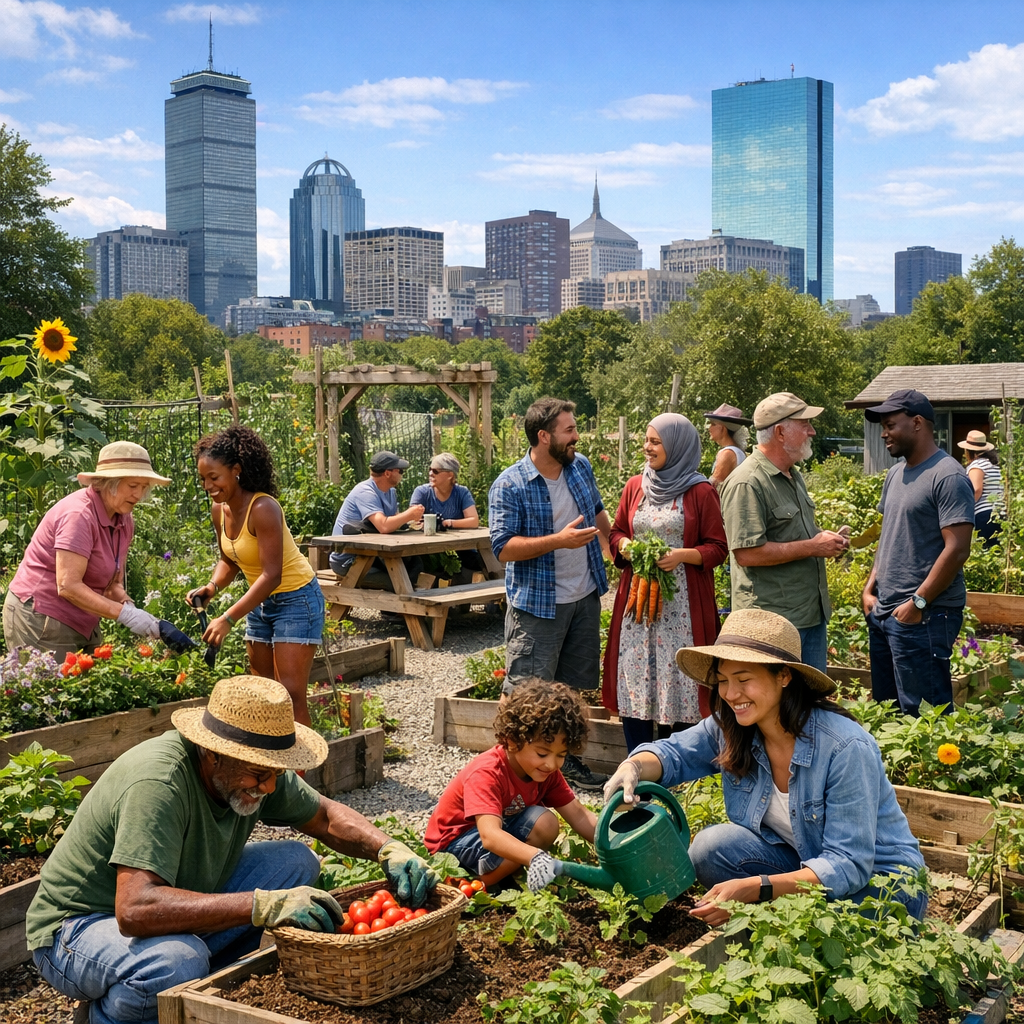
In the heart of Boston, amidst the bustling cityscape, community gardens serve as verdant sanctuaries where residents come together to cultivate not just plants, but also relationships and a sense of belonging. These shared green spaces offer numerous benefits, from providing fresh produce to fostering community engagement and promoting environmental sustainability.
The Growth of Community Gardens in Boston
Boston boasts a rich history of community gardening. According to the City of Boston’s Open Space Plan, 2015-2021, the city is home to 175 community gardens, engaging approximately 15,000 residents across 11 neighborhoods. These gardens vary in size and structure, reflecting the diverse communities they serve.
Notable Community Gardens
Fenway Victory Gardens
Established during World War II, the Fenway Victory Gardens are the oldest continuously operating victory gardens in the United States. Spanning over seven acres in the Fenway area, this garden comprises more than 500 plots tended by a diverse group of gardeners. The space not only provides fresh produce but also hosts community events, workshops, and serves as a green oasis in the city.
Berkeley Community Garden
Located in the South End, the Berkeley Community Garden encompasses 150 plots cultivated by a multicultural group of gardeners. Open to the public during daylight hours, visitors can stroll through and appreciate the variety of plants and gardening styles. The garden also emphasizes community involvement, with members participating in maintaining communal areas and organizing events.
Leland Cooperative Garden
In Jamaica Plain, the Leland Cooperative Garden operates without individually owned plots, embracing a fully communal approach. Everything in the garden is open for all to use, fostering a strong sense of community and shared responsibility. The garden features vegetable beds, perennial borders, and a central herb garden, serving as a neighborhood gathering place.
Benefits Beyond Gardening
Community gardens in Boston offer more than just a place to grow plants. They serve as platforms for education, teaching gardening skills and promoting healthy eating habits. They also contribute to environmental sustainability by reducing urban heat, improving air quality, and supporting biodiversity. Moreover, these gardens provide spaces for social interaction, strengthening neighborhood ties and fostering a sense of community pride.
Getting Involved
For those interested in joining a community garden, the City of Boston provides a directory of community gardens and urban farms, offering information on locations and contact details. Prospective gardeners are encouraged to visit gardens, speak with current members, and understand the commitments involved. Participation often includes a small annual fee and a willingness to contribute to communal tasks.
Community gardens are more than plots of land; they are vibrant hubs where urban residents connect with nature and each other. They embody the spirit of collaboration and resilience, enriching Boston’s neighborhoods one garden at a time.