

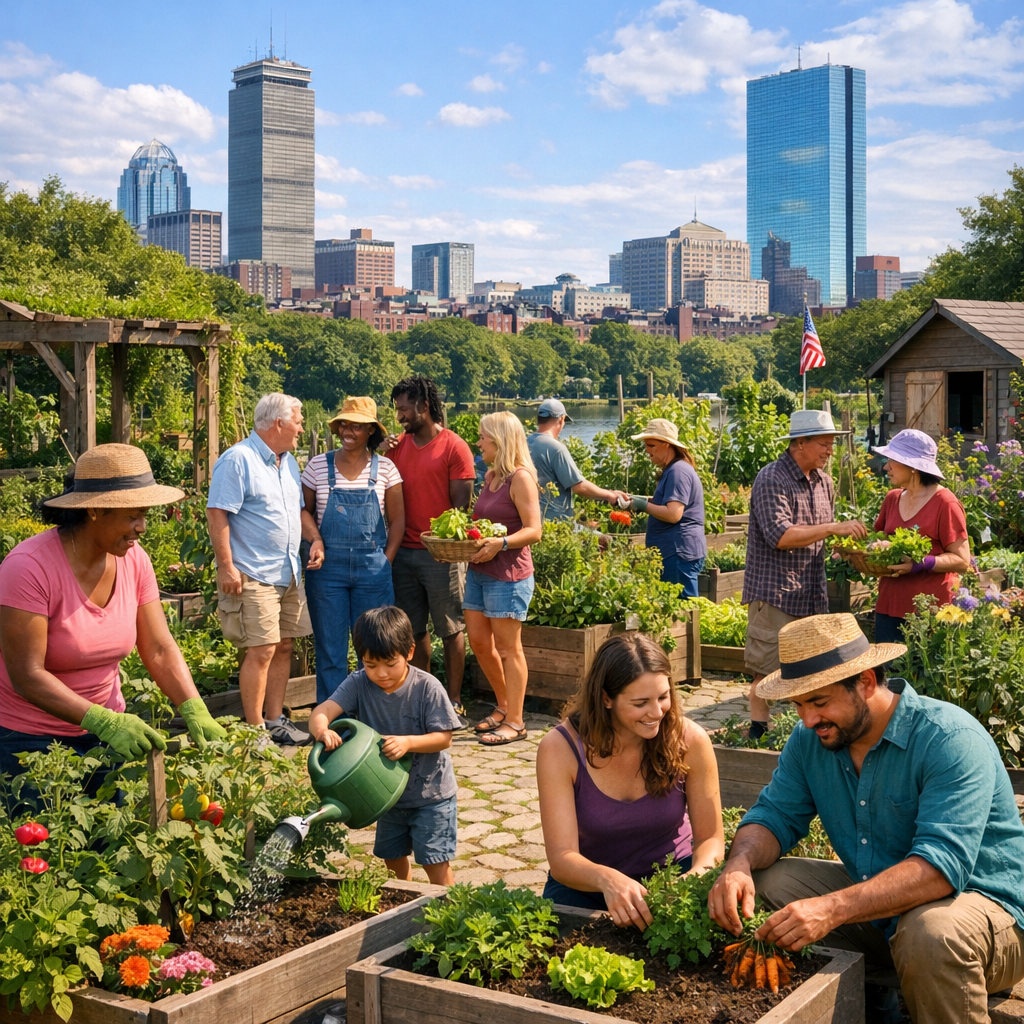
In the heart of Boston’s bustling neighborhoods, community gardens serve as verdant sanctuaries where residents come together to cultivate not only plants but also relationships and a sense of belonging. These shared green spaces offer a multitude of benefits, from providing fresh produce to fostering environmental stewardship and strengthening community ties.
The Growth of Community Gardens in Boston
Boston boasts a rich tapestry of community gardens, with over 200 such spaces spread across the city. These gardens vary in size and structure, reflecting the diverse communities they serve. For instance, the Berkeley Community Garden in the South End encompasses approximately 140 plots, each tended by local residents. Established in the mid-1970s, this garden has become a cornerstone of the neighborhood, offering a peaceful retreat amidst the urban landscape.
Benefits Beyond Gardening
Community gardens in Boston provide more than just a place to grow vegetables and flowers. They serve as platforms for education, where novice gardeners learn from seasoned ones, and workshops are held to promote sustainable practices. These gardens also contribute to food security by offering residents access to fresh, locally grown produce, which is particularly valuable in urban areas where such resources can be scarce.
Moreover, these green spaces enhance the urban environment by reducing air pollution, mitigating the urban heat island effect, and providing habitats for local wildlife. They also offer mental health benefits, serving as tranquil spaces where individuals can unwind and connect with nature.
Fostering Community Engagement
Perhaps one of the most significant impacts of community gardens is their ability to bring people together. In a city as diverse as Boston, these gardens become melting pots where individuals from various backgrounds collaborate and share experiences. Events such as communal workdays, potlucks, and educational workshops foster a sense of community and collective responsibility.
For example, the Leland Cooperative Garden in Jamaica Plain operates without individually owned plots, emphasizing communal care and shared harvests. This model encourages collaboration and ensures that the garden remains an inclusive space for all community members.
Getting Involved
For those interested in joining a community garden, the process typically involves identifying a nearby garden, understanding its membership requirements, and possibly joining a waitlist due to high demand. The City of Boston provides a comprehensive directory of community gardens and urban farms, making it easier for residents to find and connect with these spaces.
Engaging with a community garden offers an opportunity to learn new skills, contribute to local food systems, and build lasting relationships with neighbors. It’s a step toward a more sustainable and connected urban life.
In conclusion, Boston’s community gardens are more than just plots of land; they are vibrant hubs of activity that enrich the city’s social fabric, promote environmental sustainability, and enhance the quality of life for its residents. Whether you’re an experienced gardener or a curious newcomer, these gardens welcome all who wish to cultivate community alongside their crops.