

Boston’s rich history is deeply intertwined with global trade and international relations. From its early days as a bustling port to its current status as a hub for education and innovation, the city has consistently fostered connections beyond its borders.
Historical Foundations in Global Trade
In the 18th century, Boston emerged as a key player in transatlantic trade. The city’s strategic location and robust maritime infrastructure facilitated commerce with Europe, the Caribbean, and other parts of the world. Long Wharf, constructed between 1710 and 1721, became the nucleus of Boston’s maritime trade, handling both international and coastal commerce. This period saw the city exporting goods like fish, timber, and rum, while importing commodities such as sugar, molasses, and textiles. The economic prosperity from these activities laid the groundwork for Boston’s future growth.
Modern Economic and Cultural Connections
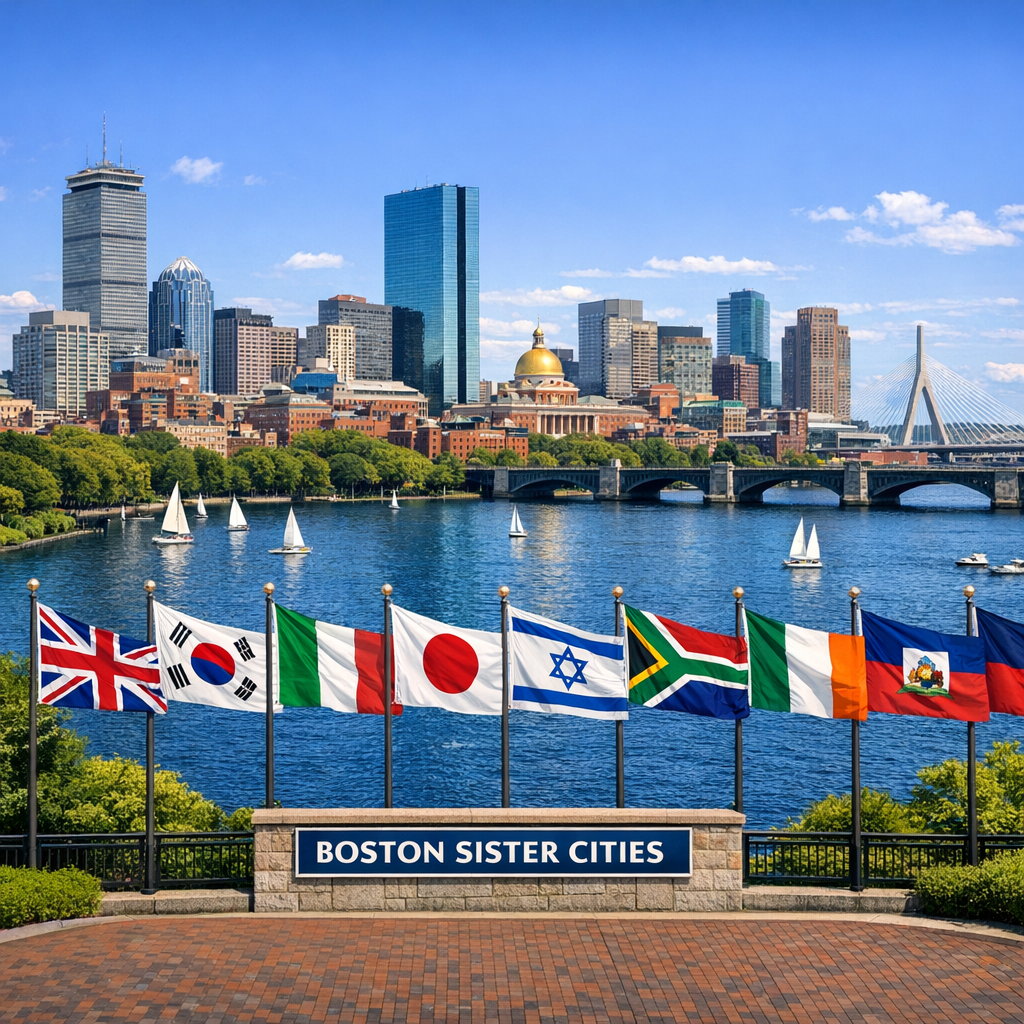
Today, Boston continues to maintain and expand its international relationships. The city has established sister city agreements with eleven cities worldwide, including Kyoto, Japan; Strasbourg, France; and Hangzhou, China. These partnerships promote cultural exchanges, economic collaboration, and mutual understanding. For instance, the sister city relationship with Kyoto, established in 1959, has led to numerous cultural and educational exchanges, strengthening ties between the two cities.
Boston’s economy also reflects its global orientation. The city is home to six Fortune 500 headquarters, including State Street, Vertex, and Liberty Mutual. Additionally, Boston’s financial services sector has deep historical roots, dating back to the early 18th century when it was a bustling port city. Over the centuries, Boston evolved into a financial powerhouse, marked by the establishment of banks, stock exchanges, and investment firms. These institutions laid the groundwork for a robust financial ecosystem, fostering innovation and attracting talent. As a result, Boston has developed a reputation for being a center of financial expertise, particularly in areas like asset management and venture capital.
Educational and Cultural Influence
Boston’s numerous universities and research institutions attract students and scholars from around the globe, contributing to the city’s diverse cultural fabric. Events like the annual Boston International Festival celebrate this diversity, showcasing music, art, and cuisine from various cultures. Such initiatives not only enrich the local community but also reinforce Boston’s role as a global city.
In conclusion, Boston’s legacy of international engagement is evident in its historical trade practices, economic partnerships, and cultural exchanges. The city’s commitment to fostering global connections continues to shape its identity and influence on the world stage.