

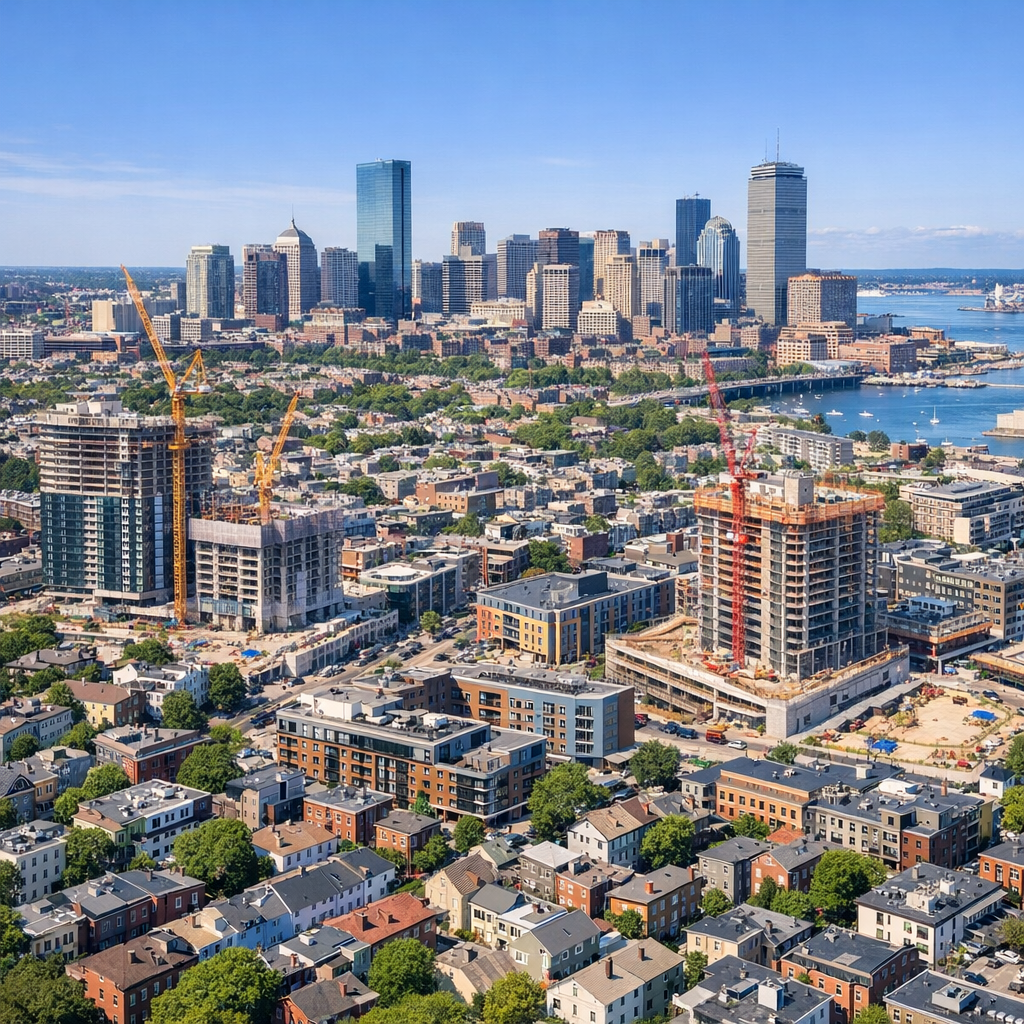
Boston’s housing market is experiencing notable shifts, with changes in home prices, inventory levels, and new developments influencing the real estate landscape.
Market Trends
In March 2026, the median sale price for single-family homes in Boston was $860,000, reflecting a 2.4% increase from the previous year. The median price per square foot rose by 6.2% to $764. Homes sold after an average of 33 days on the market, slightly longer than the 22 days observed last year. The number of homes sold increased to 338 from 327 in March 2025. Source
Despite the rise in prices, the market has seen an increase in active listings. In April 2026, active listings rose by 10.1% year-over-year, providing more options for buyers. However, new listings increased by only 0.9%, indicating that the inventory growth is due to homes remaining on the market longer rather than a surge in new properties. Source
Affordability Challenges
Affordability remains a significant concern. The median list price in April 2026 was $949,500, a 9.1% decrease from the previous year. Despite this decline, Boston’s housing prices are still nearly double the national median of $425,000. The percentage of listings with price cuts was 13.6%, below the national rate of 16.7%. Source
New Developments
To address housing needs, several new developments are underway. The construction of a six-story, 96-unit affordable, transit-oriented development at 127 Amory Street in Jamaica Plain has begun. This project is part of the ongoing Jackson Square redevelopment and aims to provide housing for households earning up to 80% of the Area Median Income, with ten units reserved for formerly homeless individuals or families. Source
Additionally, the redevelopment of the former Edison power plant in South Boston is being accelerated to prioritize the construction of over 600 housing units. This project will include six buildings and preserve historic structures, enhancing public access through the Boston Harborwalk. Construction on the housing component could begin as early as 2026. Source
These developments, along with ongoing market trends, are shaping the future of Boston’s housing landscape, offering both challenges and opportunities for residents and prospective homebuyers.