

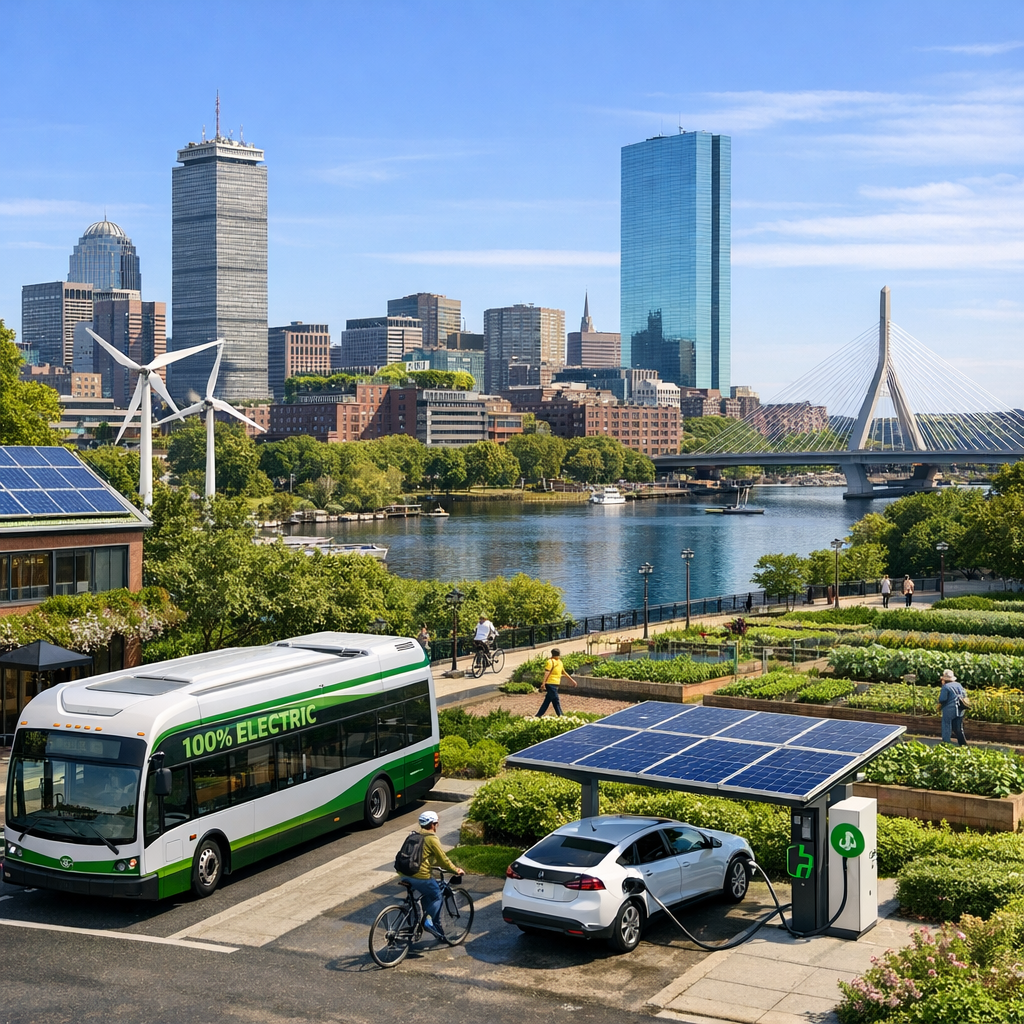
Mayor Michelle Wu recently unveiled Boston’s 2030 Climate Action Plan, setting ambitious goals to reduce community-wide greenhouse gas emissions by 50% by 2030 and achieve carbon neutrality by 2050. This comprehensive plan emphasizes immediate action and collaboration with various stakeholders to address climate change effectively.
Key Strategies in the Plan
Transportation Initiatives
The plan proposes studying congestion pricing to alleviate traffic congestion and reduce emissions. This strategy involves charging vehicles for entering certain areas during peak times, encouraging the use of public transportation and decreasing air pollution. Similar measures in other cities have shown promising results, including reduced traffic and improved air quality.
Building Sector Improvements
Recognizing that buildings contribute significantly to emissions, the plan advocates for transitioning from gas to electric stoves in residential and commercial properties. This shift aims to decrease reliance on fossil fuels and promote cleaner energy sources within the city.
Community Engagement and Equity
A central theme of the 2030 Climate Action Plan is its focus on equity and community involvement. The administration plans to work closely with local organizations, businesses, and residents to ensure that climate initiatives are inclusive and address the needs of all Bostonians. This collaborative approach seeks to create a more resilient and sustainable city for future generations.
For more details on the plan and upcoming community meetings, residents are encouraged to visit the city’s official website.