

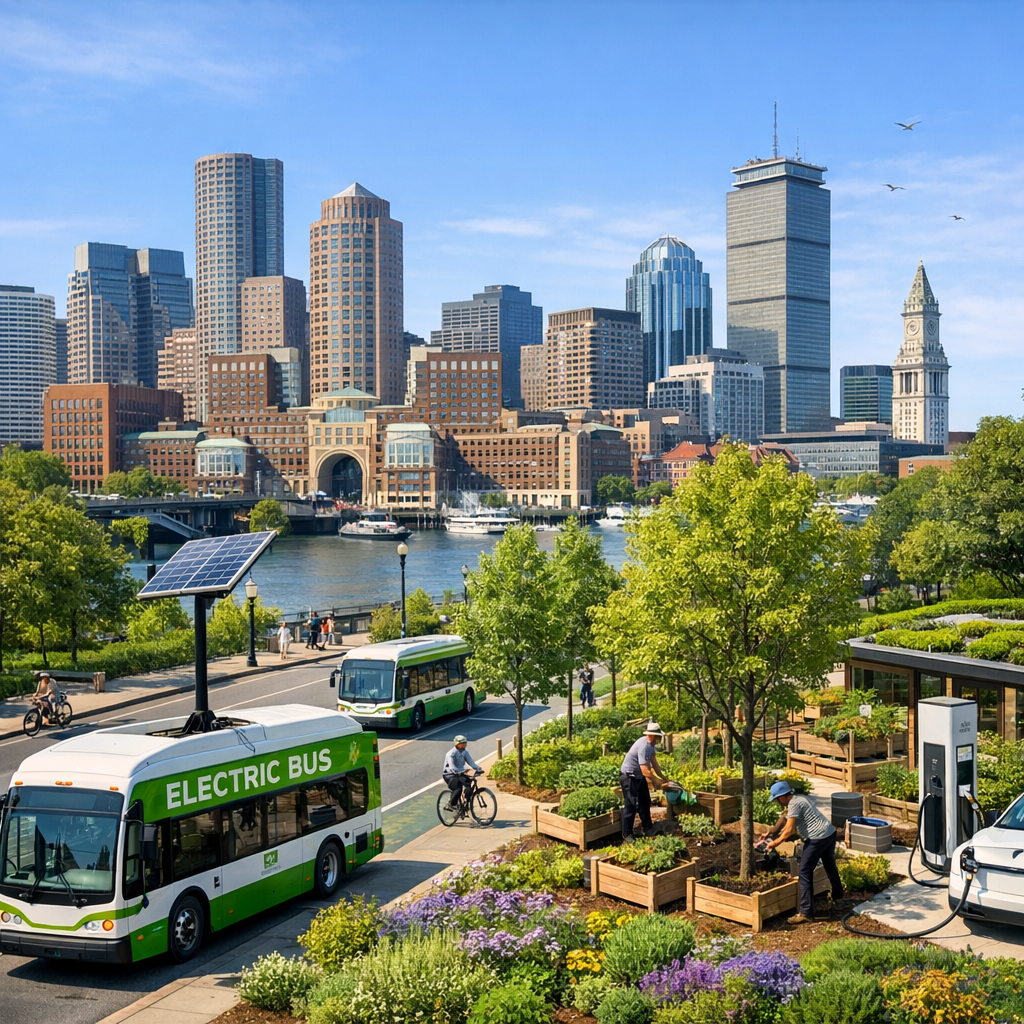
Boston has recently unveiled its 2030 Climate Action Plan, aiming to reduce greenhouse gas emissions by 50% by 2030 and achieve carbon neutrality by 2050. This ambitious plan encompasses various strategies that will directly affect our neighborhoods and daily lives.
Key Initiatives and Community Impact
Congestion Pricing
The city is considering implementing congestion pricing to alleviate traffic congestion and reduce emissions. This approach involves charging vehicles for entering certain areas during peak times, potentially leading to improved air quality and generating revenue for public transit enhancements. While this could ease our daily commutes, it may also raise concerns about transportation costs for residents.
Fare-Free Bus Routes
Building on the success of fare-free programs on routes 23, 28, and 29, the city plans to expand this initiative. These routes have seen a 35% increase in ridership, indicating a strong community need for accessible public transportation. The continuation and expansion of fare-free buses could significantly benefit residents, especially in underserved neighborhoods.
Transitioning to Electric Stoves
To reduce reliance on natural gas, Boston is exploring the transition from gas to electric stoves in both residential and commercial settings. This move aims to lower emissions and improve indoor air quality. However, it may pose challenges for local restaurants and homeowners in terms of equipment upgrades and associated costs.
Urban Tree Canopy Expansion
The plan emphasizes increasing Boston’s urban tree canopy to combat urban heat and enhance air quality. Efforts will focus on planting more trees in areas lacking green space, providing residents with cooler environments and recreational opportunities.
Community Engagement and Moving Forward
Mayor Michelle Wu’s administration is committed to collaborating with community members to implement these initiatives effectively. Residents are encouraged to participate in public forums and provide feedback to ensure the plan aligns with the diverse needs of Boston’s neighborhoods.
As we navigate these changes, staying informed and involved will be crucial. The success of Boston’s Climate Action Plan depends on our collective efforts to create a sustainable and equitable future for all.